Its colors
orange, red, yellow
When it turns here
first color about Sep 17, 2026, at its best Sep 27, 2026, fading by Sep 30, 2026, bare by Oct 10, 2026 (estimate).
this year, by the model, the forest here peaks about Oct 7, 2026.
Model of Oct 27, 2026.
How long it holds
the sources give no figure for how long it holds its color.
Where it grows thickest
The most numerous tree in Vermont, about a fifth of New York's forest trees, common across Ontario's Great Lakes and St. Lawrence forest and the southern third of Quebec; in Pennsylvania it reaches south on the high plateaus of the Laurel Highlands.
fertile slopes, roadsides, cool woods
Natural range, from Little’s atlas. An outline says where it grows, not how much of it there is.
By height
Up to about 760 m (2,500 ft) in northern New England and New York; in Algonquin it holds the mid-slopes.
From the road
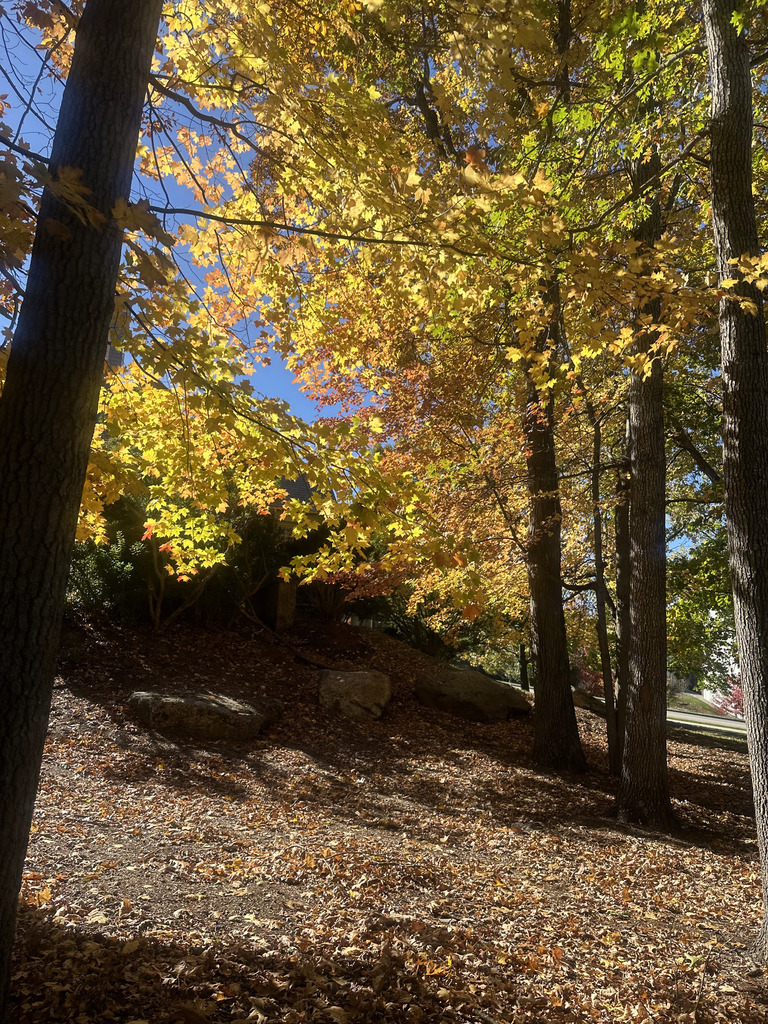
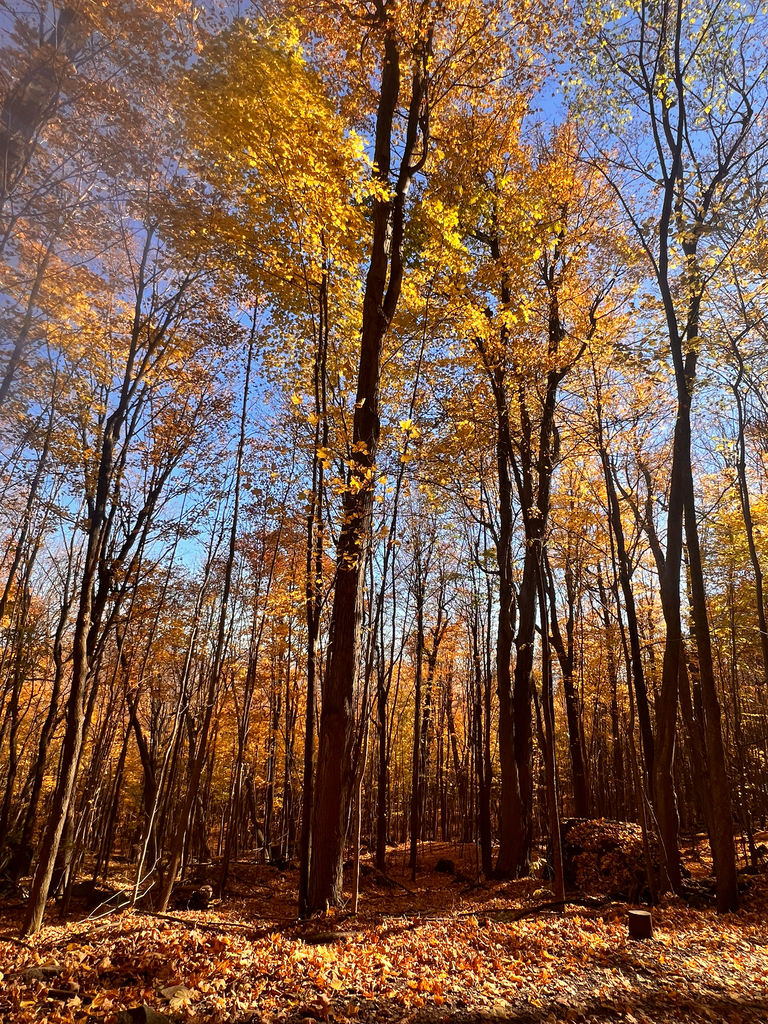
A big tree with a dense oval crown on fertile slopes and along roads and farm edges, glowing orange with yellow inside the crown and red on its sunny side; its leaves have five smooth-edged lobes, where red maple's are toothed.
Its pictures this autumn
Where to see it
pictures of it this autumn from …
- Burlington, the Islands & Lake Champlain, VT · 7 pictures, newest Oct 15, 2026
- Middlebury & the Champlain Valley, VT · 5 pictures, newest Oct 19, 2026
- The Mohawk Trail & Franklin County, MA · 4 pictures, newest Oct 23, 2026
- Boston, the Blue Hills & the harbor, MA · 3 pictures, newest Oct 22, 2026
- Brattleboro, Wilmington & the southern hills, VT · 3 pictures, newest Oct 24, 2026
- New York City & its parks, NY · 3 pictures, newest Oct 22, 2026
- Albany, Troy & the Capital District, NY · 2 pictures, newest Oct 25, 2026
- Cayuga, Skaneateles & the eastern Finger Lakes, NY · 2 pictures, newest Oct 22, 2026
- Concord, Lexington & the Middlesex woods, MA · 2 pictures, newest Oct 24, 2026
- Hartford, the Farmington Valley & the central river, CT · 2 pictures, newest Oct 25, 2026
- Les Cantons-de-l'Est, QC · 2 pictures, newest Oct 18, 2026
- Madison & the Four Lakes, WI · 2 pictures, newest Oct 22, 2026
The sources’ own words
The sources below give no figure for how long a sugar maple holds its color. The nearest figure is for the trees in one camera’s view rather than for one species: the camera at Columbia’s Lamont-Doherty Earth Observatory, in the lower Hudson valley, saw them go from peak color to bare in about eleven days in 2020 and about nine in 2021, as Columbia’s Climate School reported on September 26, 2022.
A large and common tree of our roadsides and cool forests on fertile sites. Its opposite leaves with wavy edges and characteristic maple shape turn varying luminous shades of yellow to orange and red from middle to late October.
There is a big reason why New England foliage, and that of Vermont in particular, are renown world-wide: the sugar maple tree.
During foliage, their leaves run the spectrum of color, with leaves that stay yellow in full shade and turn hues of red in the sun.
Most red maples, sugar maples, black cherries, and sweet birches peak around October 10-20.
Sugar Maples typically display red/orange in the mid-slope areas where they are found in Algonquin Park.
Sugar maple (Acer saccharum) continues to be the most numerous tree in Vermont (Table 2), and sugar maple volume has remained stable since 2010 (Fig. 5).
In fact, about 20% of all the forest trees in New York are sugar maple.
Sugar maple is a common tree in the Great Lakes - St. Lawrence and Deciduous forest regions.
However, the Laurel Highlands’ uniquely elevated terrain brings some of the northern hardwood forest species, like sugar maple, into southern Pennsylvania which creates a diverse splash of color in the fall.
The northern limit of sugar maple (figs. 1, 2) nearly parallels the 35th mean annual isotherm extending eastward from the extreme southeast corner of Manitoba, through central Ontario, the southern third of Quebec and all of New Brunswick and Nova Scotia.
In northern New England and New York State it grows at elevations up to 760 m (2,500 ft.).
Red maple leaves are more toothed, while the lobes on sugar maples have smoother edges.
Medium to tall tree (to 100 feet) with very dense elliptical crown.